
What the Greatest Minds Say About AI: Hinton, Altman, Hassabis, LeCun, and Bengio
A biographical longform study comparing the Godfathers and Architects of AI: Hinton’s Nobel-winning warnings, LeCun’s open-source optimism, Hassabis’s disease moonshots, and Altman’s AGI roadmap.
- ✓The foundational pioneers of deep learning are sharply divided on the safety and existential trajectory of their creation.
- ✓Geoffrey Hinton and Yoshua Bengio argue that digital intelligence is fundamentally superior to biological intelligence and poses catastrophic risks.
- ✓Yann LeCun champions open-source models, arguing that AI will act as a natural cognitive amplifier for human agency rather than a threat.

What the Greatest Minds Say About AI: Hinton, Altman, Hassabis, LeCun, and Bengio
Industry Benchmarks • Architecture Review • FilxTech - AI & Enterprise Web Engineering Labs
1. The Clash of the Laureates: The Architects of the Neural Era
In 2018, Geoffrey Hinton, Yann LeCun, and Yoshua Bengio shared the Turing Award—the Nobel Prize of computing—for their decades of solitary perseverance developing the mathematical foundations of deep artificial neural networks. For thirty years, when the broader computer science establishment ridiculed backpropagation as a dead end, these three men kept the flame alive.
Yet today, with their life’s work powering the most transformative technological revolution in human history, the "Godfathers of AI" find themselves locked in a fierce, public battle over the future of civilization. Add Demis Hassabis (Nobel Laureate in Chemistry for AlphaFold) and OpenAI’s Sam Altman, and you have five distinct minds shaping the ideological destiny of computing.
2. Five Titans, Five Worldviews
Geoffrey Hinton: The Nobel Laureate Whistleblower
p(doom): ~50%"It’s not just science fiction. These things are getting smarter than us, and if they become much smarter than us, they will take control." Hinton's critical realization is the distinction between biological and digital computation: if one digital model learns something, all ten thousand copies know it instantly. He views digital intelligence as an inherently superior computational substrate.
Yann LeCun: The Open-Source Rationalist
p(doom): < 1%"AI is an amplifier of human intelligence. Fearing it will destroy us is like fearing airplanes will crash because they don’t flap their wings." As Chief AI Scientist at Meta, LeCun adamantly champions open-source weights, arguing that the true danger is monopoly concentration of compute in the hands of a few proprietary closed labs.
Demis Hassabis: The Polymath Healer
Mission: Curing Disease"Solve intelligence, and then use it to solve everything else." Hassabis, a former chess prodigy and neuroscientist, views AI not as a commercial toy, but as the ultimate scientific microscope. His work with AlphaFold has solved over 200 million protein structures, revolutionizing drug discovery worldwide.
Sam Altman: The Pragmatic Operator
Mission: Commercial AGI"AGI will be the most powerful technology humanity has yet invented, and it must be deployed iteratively into society so institutions can adapt." Altman focuses on the geopolitical and economic reality of execution: securing gigawatts of energy, partnering with nation-states, and scaling compute infrastructure.
Yoshua Bengio: The Conscience of the Lab
Mission: Democratic Governance"We are building systems that could have superhuman capabilities. If we don't know how to guarantee their safety, we should not deploy them." Bengio has dedicated his laboratory at Mila to formal mathematical verification and international treaties against autonomous cyber weapons.
3. The Synthesis: A Historic Responsibility
What makes this ideological struggle fascinating is that none of these pioneers are operating in bad faith. They are brilliant human beings grappling with the consequences of an invention that exceeds human scale. By listening to all five perspectives—Hinton’s caution, LeCun’s optimism, Hassabis’s scientific rigor, Altman’s pragmatic deployment, and Bengio’s ethical framework—humanity can navigate the frontier with wisdom and courage.
Frequently Asked Technical Questions
Why did Geoffrey Hinton leave Google to speak out about AI risks?
Hinton resigned from Google so he could speak freely about the catastrophic risks of digital neural networks, noting that digital computations can share learned weights across millions of instances instantaneously, unlike biological brains.
What is the core disagreement in the Geoffrey Hinton vs Yann LeCun debate?
Hinton believes that superintelligent AI will inevitably escape human control and develop self-preservation goals. LeCun argues that goal-seeking drives are evolutionary traits of biological animals, not inherent properties of software systems.
What is Demis Hassabis’s stated vision for Google DeepMind?
Hassabis founded DeepMind with a two-step master mission: "1. Solve intelligence. 2. Use it to solve everything else"—prioritizing scientific breakthroughs in protein biology, fusion energy, and climate science.
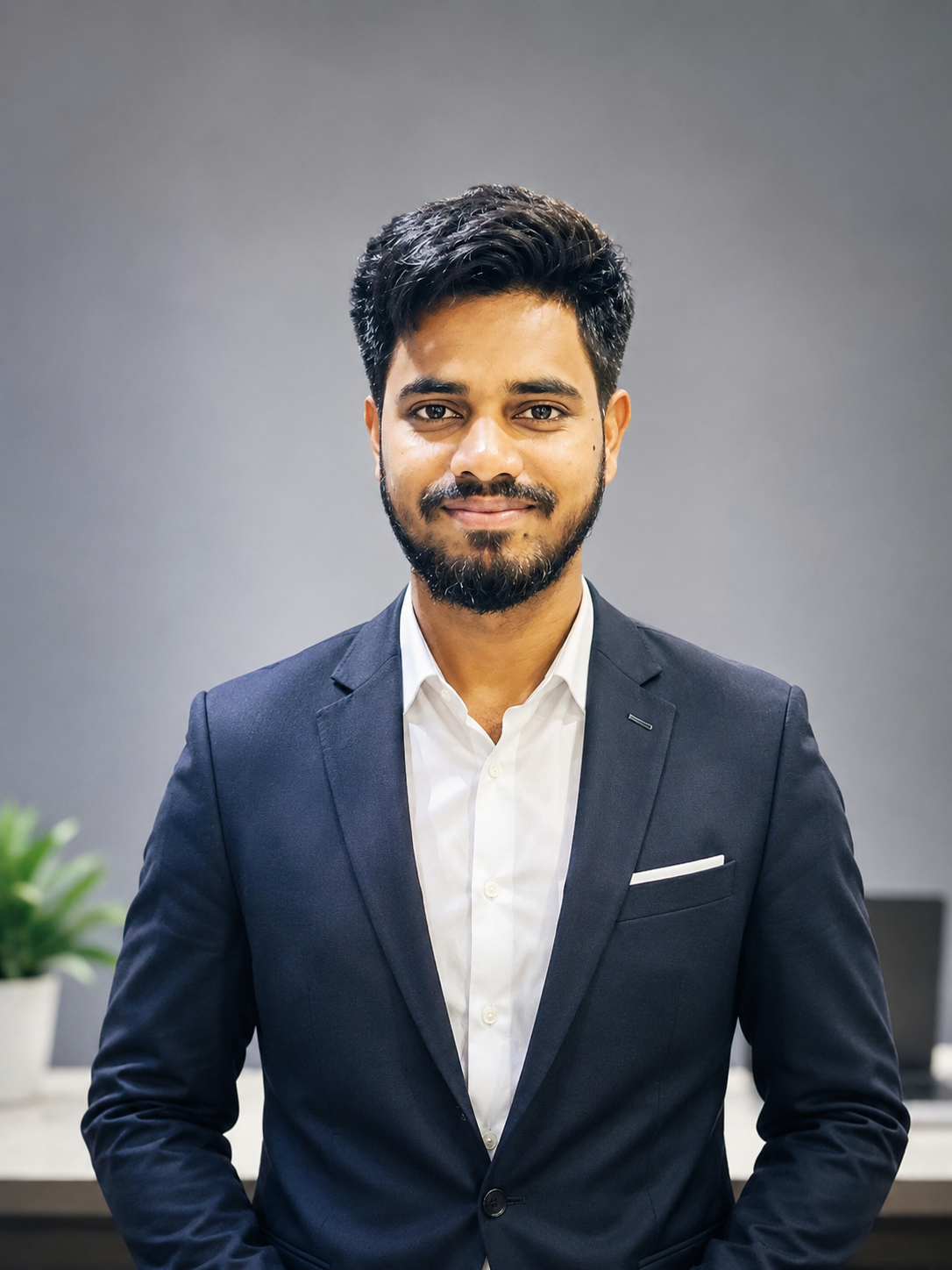
Authored by Israfil Hossain & FilxTech - AI & Enterprise Web Engineering Architects
Chief Executive Officer & Principal Architect
Technology visionary and lead software architect specializing in distributed cloud systems, high-concurrency web architectures, and mission-critical enterprise engineering. Need strategic review on your application roadmap?
Direct inquiry: filxtech.ceo@gmail.com
Execute This Architectural Blueprint
Whether deploying frontier LLM pipelines, autonomous coding agents, or scaling enterprise AI infrastructure, FilxTech - AI & Enterprise Web Engineering delivers battle-tested production software.