
The Future of AI (Next 5–10 Years): From Autonomous Agents to Physical Robotics
A futurist and deep-tech essay mapping the 5-10 year horizon: Level 1 chatbots to Level 5 organizational AGI, embodied humanoid robotics, and autonomous scientific discovery.
- ✓AI evolution is advancing through five defined tiers: Chatbots, Reasoners, Autonomous Agents, Innovators, and Organizations.
- ✓Embodied AI—transferring multimodal foundation models into physical humanoid robot bodies—is the primary breakthrough of the late 2020s.
- ✓Autonomous scientific discovery will solve major materials science, clean battery chemistry, and superconductor challenges.
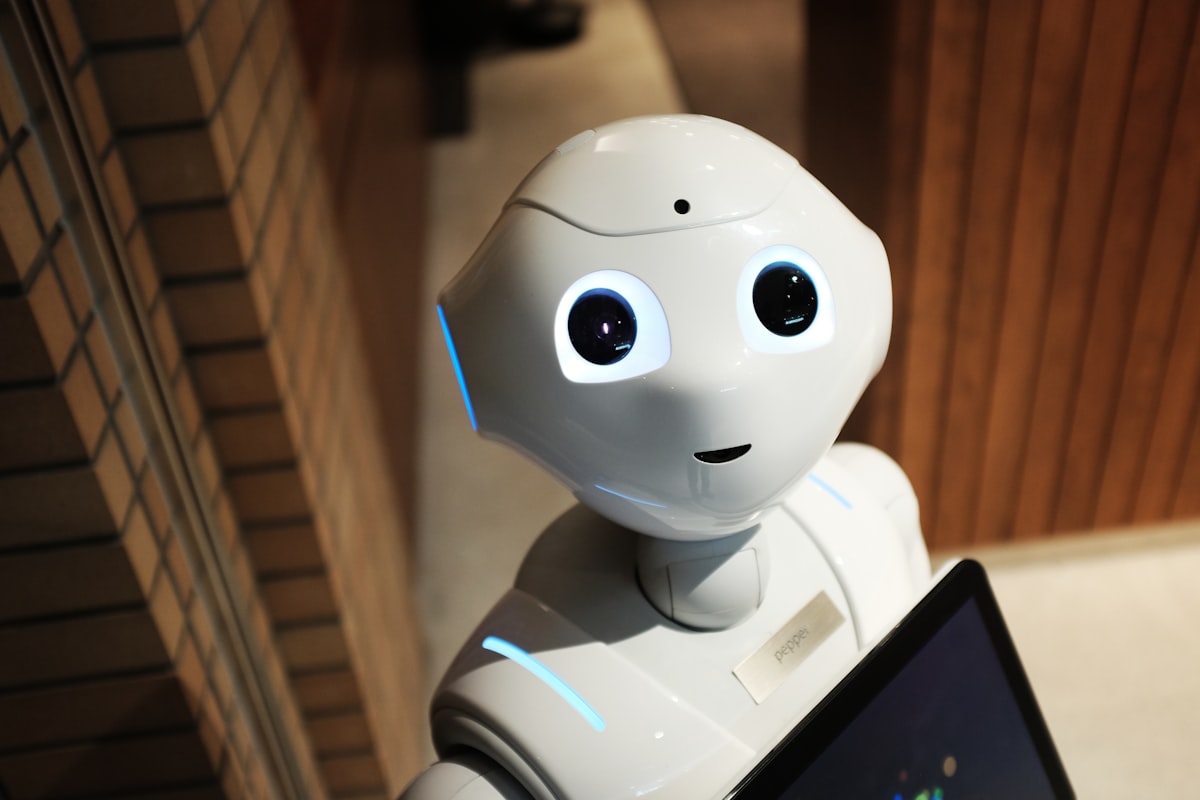
The Future of AI (Next 5–10 Years): From Autonomous Agents to Physical Robotics
Industry Benchmarks • Architecture Review • FilxTech - AI & Enterprise Web Engineering Labs
1. The Five Levels of Artificial Intelligence: Where We Are Going
Humanity has spent the past three years marveling at Level 1: conversational chatbots that answer questions inside a browser window. Today, as test-time reasoning models take hold, we have crossed firmly into Level 2: machines capable of deliberate, multi-step problem solving.
To anticipate the future of AI predictions over the next five to ten years, we must look beyond text interfaces. The roadmap formulated by frontier research institutions maps a clear trajectory toward embodied, physical, and scientific super-agency:
Natural language text and image generation. Statistical pattern recognition across internet-scale pretraining corpora.
Test-time compute scaling. Internal chain-of-thought verification, solving complex math olympiad and programming challenges.
Systems capable of executing multi-day objectives: auditing an entire enterprise system, authoring unit tests, deploying canary servers, and managing CI/CD pipelines autonomously.
AI models forming original scientific hypotheses, designing automated wet-lab experiments, and synthesizing novel materials science compounds.
Autonomous networks coordinating supply chains, robotic manufacturing floors, and software operations with human-directed strategic goals.
2. The Embodied Leap: Humanoid Robotics in the Physical World
Intelligence without a body is trapped in a glass jar. The defining breakthrough of the late 2020s is embodied AI and humanoid robots.
For decades, robotics stalled because programming a robotic hand to pick up an egg required thousands of lines of hard-coded inverse kinematics; if the egg was slightly larger than expected, the robot crushed it. Today, robotics labs take multimodal Vision-Language-Action (VLA) models and connect them directly to actuators. The robot watches hundreds of hours of human workers assembling transmissions, learns the tactile pressure required, and generalizes to handle unexpected tools on a real factory floor. Humanoid robots from Figure, Tesla Optimus, and Boston Dynamics are moving from YouTube demos into operational manufacturing plants.
3. AI Scientific Discovery: Curing the Diseases of Humanity
The ultimate promise of artificial general intelligence is not generating marketing copy or writing website buttons. It is accelerating the pace of scientific discovery.
When AI models can read every scientific paper ever published, simulate molecular dynamics in quantum chemical containers, and direct automated robotic pipettes in synthetic biology laboratories, humanity will compress a century of medical and energy breakthroughs into a single decade: solving room-temperature fusion, synthesizing targeted cancer antibodies, and developing ultra-dense solid-state batteries. The future is physical, profound, and closer than we think.
Frequently Asked Technical Questions
What are the five levels of AI leading toward AGI?
As defined by AI research labs: Level 1 (Conversational Chatbots), Level 2 (Reasoners with System 2 deliberate thinking), Level 3 (Autonomous Agents executing multi-day tasks), Level 4 (Scientific Innovators proposing new hypotheses), and Level 5 (Fully Autonomous Organizations).
When will humanoid robots powered by AI enter commercial factories at scale?
Leading robotics companies (Figure AI, Tesla Optimus, Boston Dynamics) are already deploying pilot humanoid fleets for structured automotive assembly and warehouse logistics, with mass deployment anticipated between 2027 and 2030.
How will AI revolutionize scientific discovery over the next decade?
By generating and simulating millions of candidate molecular structures in parallel, reducing the discovery timeline for new battery chemistries, room-temperature semiconductors, and targeted enzymatic cancer treatments from decades to weeks.

Authored by Israfil Hossain & FilxTech - AI & Enterprise Web Engineering Architects
Chief Executive Officer & Principal Architect
Technology visionary and lead software architect specializing in distributed cloud systems, high-concurrency web architectures, and mission-critical enterprise engineering. Need strategic review on your application roadmap?
Direct inquiry: filxtech.ceo@gmail.com
Execute This Architectural Blueprint
Whether deploying frontier LLM pipelines, autonomous coding agents, or scaling enterprise AI infrastructure, FilxTech - AI & Enterprise Web Engineering delivers battle-tested production software.