
Best AI Tools for Video Editing & Generation: From Sora and Veo to Runway
A documentary filmmaker deep dive comparing generative video engines (Sora, Google Veo, Runway Gen-3, Kling) against automated AI editing workflows in Premiere, Descript, and CapCut.
- ✓Generative video models like Google Veo and Runway Gen-3 have mastered camera physics, lighting consistency, and cinematic motion.
- ✓AI editing workflows like Descript and Premiere Generative Extend cut rough-cut assembly time by over 70%.
- ✓Frame consistency across multi-shot sequences remains the defining benchmark separating toy generators from professional film tools.
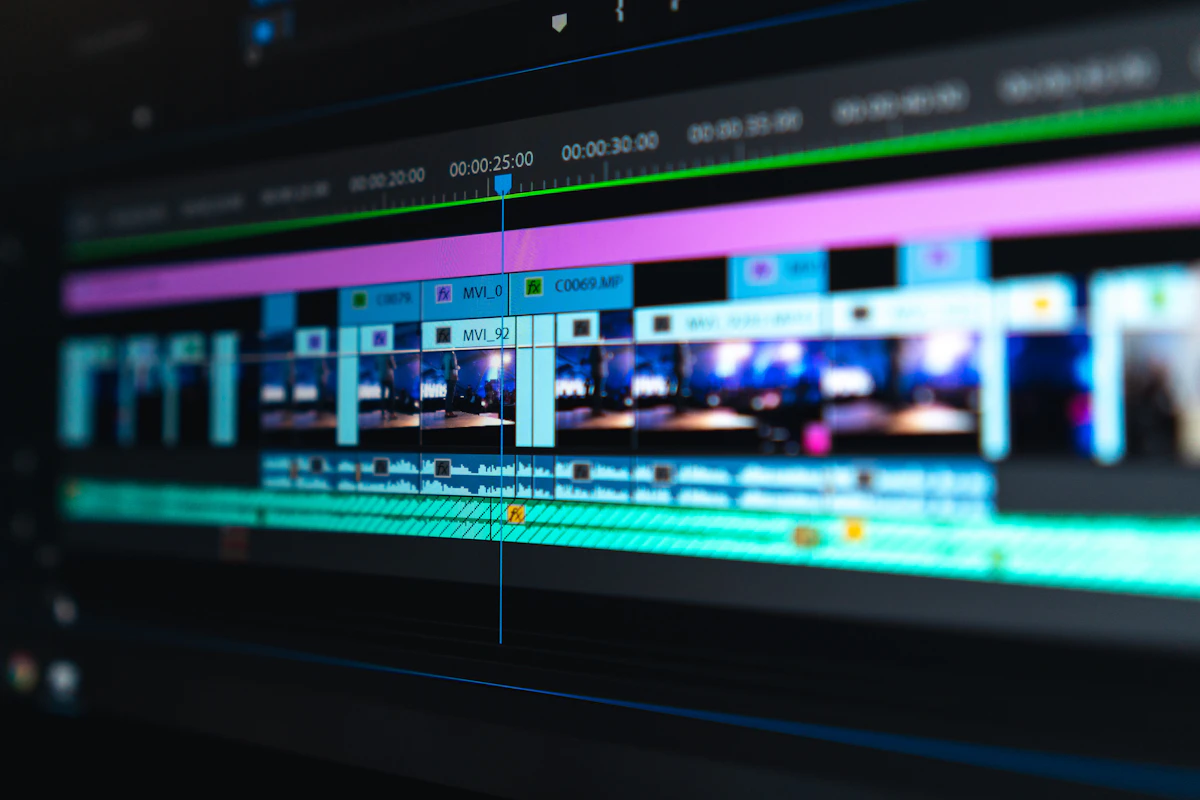
Best AI Tools for Video Editing & Generation: From Sora and Veo to Runway
Industry Benchmarks • Architecture Review • FilxTech - AI & Enterprise Web Engineering Labs
1. The Cinematic Revolution: Lighting, Physics, and Storytelling Pacing
In documentary filmmaking, every cut is an emotional contract with the audience. For decades, the craft demanded grueling physical trade-offs: waiting twelve hours for golden-hour lighting across a misty valley, renting expensive motorized camera dollies, or spending three days logging sixty hours of interview footage to find a three-second hesitation in a subject's voice.
Over the past eighteen months, artificial intelligence has fundamentally disrupted post-production. But finding the best AI for video editing and generation requires dividing the ecosystem into two distinct disciplines: Generative Video (creating synthetic shots from text prompts) and Automated Video Editing Workflows (accelerating real human documentary storytelling).
2. Generative Video Showdown: Google Veo vs Sora vs Runway vs Kling
In our side-by-side AI video generator comparison, we evaluated how each engine handles camera motion, lighting physics, and the dreaded "temporal drift" (where a subject’s face or clothing morphs between frames):
Google Veo
Cinematic LeaderUnderstands lens terminology like a veteran Director of Photography. Prompts like "35mm anamorphic lens, shallow depth of field, 180-degree shutter pan" yield accurate optical blur and realistic camera inertia.
Runway Gen-3 Alpha
Motion ControlThe workhorse for commercial motion designers. Unmatched Camera Control and Motion Brush features allow artists to paint specific regions of a frame to dictate exact fluid dynamics and wind speed.
OpenAI Sora
World SimulationUnrivaled scene duration (up to 60 seconds) with continuous spatial geometry. Excels at complex urban drone fly-throughs and simulated material physics, though occasionally exhibits limb-blending glitches.
Kuaishou Kling AI
Human AnatomyRemarkable fidelity on human faces, complex hand gestures, and food physics. Handles realistic chewing, talking, and fine fabric motion with astonishingly little temporal flicker.
3. Automated Video Editing Workflows: Reclaiming 30 Hours per Project
While generative video garners headlines, automated video editing tools are quietly saving filmmakers hundreds of hours in the editing suite:
- Descript: Edit video by editing text. Delete filler words ("um", "you know"), cut dead air gaps automatically, and generate studio-grade AI voiceover corrections using Overdub.
- Adobe Premiere Pro (Firefly Generative Extend): Stretches video clips by generating two extra seconds of background frames, saving an editor when a crucial shot cuts out slightly before a musical transition.
- CapCut AI: The gold standard for fast social distribution, featuring automated dynamic kinetic captions, intelligent auto-reframe for 9:16 mobile viewports, and AI sound effect generation.
The future of video is hybrid: human storytellers curating narrative emotion, empowered by generative engines that turn impossible camera angles into instant B-roll.
Frequently Asked Technical Questions
How does Google Veo compare to OpenAI Sora in visual physics and camera control?
Google Veo provides precise cinematic camera directions (dolly shots, pans, rack focus) and native 1080p/4k rendering with fewer spatial morphing artifacts, while Sora excels in hyper-stylized surreal imagery.
Can automated video editing tools replace a human documentary editor?
No. Automated tools excel at tedious assembly tasks—rough-cut assembly from transcripts, silence removal, multi-camera angle switching, and B-roll alignment—freeing filmmakers to focus on emotional pacing and story arcs.
What is Adobe Premiere Pro Generative Extend?
It is an AI feature powered by Firefly that analyzes audio waveforms and video frames at the end of a clip, hallucinating additional frames to help editors hit musical beats or cover awkward audio cuts seamlessly.

Authored by Israfil Hossain & FilxTech - AI & Enterprise Web Engineering Architects
Chief Executive Officer & Principal Architect
Technology visionary and lead software architect specializing in distributed cloud systems, high-concurrency web architectures, and mission-critical enterprise engineering. Need strategic review on your application roadmap?
Direct inquiry: filxtech.ceo@gmail.com
Execute This Architectural Blueprint
Whether deploying frontier LLM pipelines, autonomous coding agents, or scaling enterprise AI infrastructure, FilxTech - AI & Enterprise Web Engineering delivers battle-tested production software.