
Autonomous Weapons & Algorithmic Warfare: Why Defence Experts Want an AI Geneva Convention
A defense and international security analysis of Lethal Autonomous Weapons Systems (LAWS): AI drone swarms, visual edge navigation without GPS, target identification error margins, and the urgent push for an international AI Geneva Convention.
- ✓Modern battlefield electronic warfare jams GPS and radio links; autonomous loitering munitions now rely on onboard edge vision AI to hunt targets without operator guidance.
- ✓Lethal Autonomous Weapons Systems (LAWS) eliminate human reaction delays, compressing tactical decision cycles from minutes down to milliseconds.
- ✓Without a legally binding international treaty, algorithms operating at machine speed create catastrophic risks of unintended escalation and civilian misidentification.
- ✓The International Committee of the Red Cross (ICRC) and United Nations demand an absolute ban on autonomous weapons targeting human beings without meaningful human control.
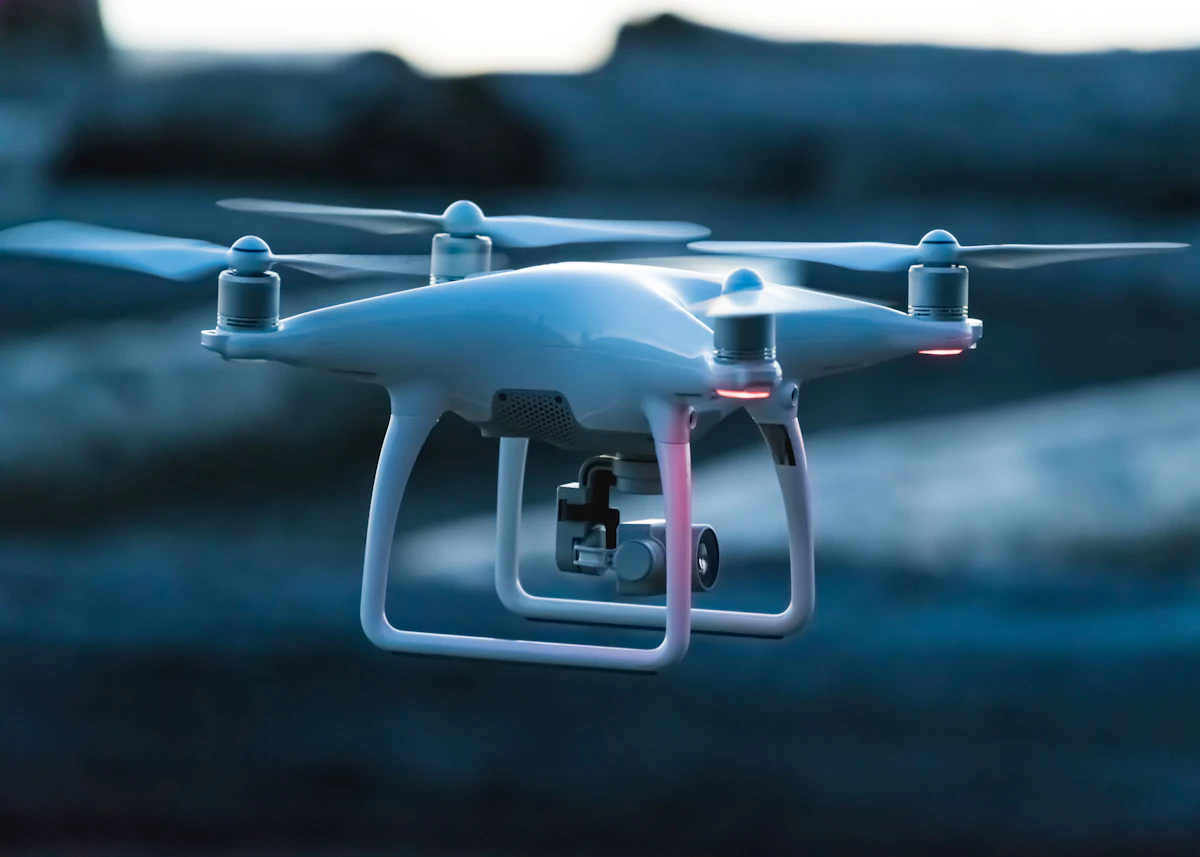
Autonomous Weapons & Algorithmic Warfare: Why Defence Experts Want an AI Geneva Convention
Industry Benchmarks • Architecture Review • FilxTech - AI & Enterprise Web Engineering Labs
1. The Silent Sky: Why Electronic Warfare Forced the Autonomous Pivot
For twenty years, the public image of drone warfare was the MQ-9 Reaper: a multi-million-dollar aircraft flying at 25,000 feet, piloted via satellite link by an officer seated in an air-conditioned trailer in Nevada. The human was always in the loop. The human pulled the trigger.
That paradigm is obsolete. In modern high-intensity electronic warfare across Eastern Europe and the Middle East, the electromagnetic spectrum is a violent storm of jamming. High-power spoofers fry satellite GPS signals; broadband jammers sever the radio control links between pilots and their drones.
When a $1,000 FPV (First-Person View) loitering drone loses connection at 200 meters from a target, it crashes uselessly into the mud. The military countermeasure was inevitable: onboard Edge AI.
Militaries now equip $40 edge-compute processors (like Raspberry Pi or Jetson modules) running lightweight convolutional neural networks directly on the drone. When radio connection is severed, the autonomous software takes over: it tracks optical contrast, matches the vehicle shape against a neural model of enemy armor, and executes the terminal dive with zero human input.
2. The Speed Trap: Flash Wars at 20 Milliseconds
Military commanders do not adopt Lethal Autonomous Weapons Systems (LAWS) because they dislike humans; they adopt them because of the physics of modern combat:
Human OODA Loop (Seconds)
A human operator requires 500ms to register visual contact, 2 seconds to confirm target identity, and 3 seconds to push the button. Against supersonic missiles or coordinated drone swarms, human biological reaction time is fatally slow.
Algorithmic OODA Loop (Milliseconds)
An autonomous sensor network identifies radar signatures, calculates ballistic trajectories, coordinates thirty interceptor drones, and neutralizes incoming threats in under 30 milliseconds without a single human keystroke.
This creates an unstable escalation dynamic known as hyperwar. If Nation A keeps a human in the loop, while Nation B removes the human to save 2,000 milliseconds, Nation B wins every tactical engagement. Every armed force is structurally incentivized to remove the human safety catch.
3. The Three Pillars of an AI Geneva Convention
Just as the 1925 Geneva Protocol banned chemical and biological weapons after the horrors of World War I, international legal and military ethicists are demanding a binding treaty on autonomous algorithms:
- Pillar 1: Prohibition on Anti-Personnel LAWS. An absolute ban on autonomous weapons designed to identify and execute individual human beings without positive, human optical sign-off.
- Pillar 2: Predictability & Explainability Standards. Forbidding black-box models whose lethal targeting behavior cannot be rigorously audited in post-incident military tribunals.
- Pillar 3: The Nuclear Air-Gap. Strict international treaty verification ensuring that strategic nuclear early-warning and launch authorization chains maintain physical, human air-gaps immune to algorithmic automation.
4. The Moral Invariant: Preserving Human Accountability
Warfare is the ultimate expression of human tragedy, but throughout history, it was governed by moral and legal accountability. When a soldier fires a weapon, they carry the legal and spiritual weight of that decision; they can be prosecuted for war crimes if they violate the Geneva Conventions.
Who do you put on trial when an unexplainable neural network misidentifies a school bus as an armored troop transport and launches a missile? The software engineer? The product manager? The GPU manufacturer? The commanding general?
Delegating the decision to kill to a mathematical weight matrix degrades the ultimate value of human life. Maintaining human agency in warfare is not a technical impediment; it is the last thin line protecting civilization from algorithmic barbarism.
Frequently Asked Technical Questions
What constitutes a Lethal Autonomous Weapons System (LAWS)?
LAWS are weapon systems that, once activated, can select and engage targets without further intervention by a human operator. This includes loitering suicide drones, automated air-defense turrets, and robotic submersibles that identify and strike targets using onboard sensors and algorithms.
Why is electronic warfare driving militaries toward autonomous AI weapons?
In contested conflicts (such as in Ukraine), high-power electronic jamming blankets the radio spectrum, severing remote-control links between human drone pilots and their aircraft. The only way for drones to strike targets under electronic jamming is to delegate target identification and terminal guidance to onboard computer vision models.
What would an "AI Geneva Convention" actually regulate?
It would establish binding prohibitions: 1) Mandating that lethal targeting decisions against human combatants always require positive human sign-off (Human-in-the-Loop), 2) Banning autonomous weapons that cannot discriminate between civilians and combatants, and 3) Forbidding algorithmic nuclear launch triggers.

Authored by Israfil Hossain & FilxTech - AI & Enterprise Web Engineering Architects
Chief Executive Officer & Principal Architect
Technology visionary and lead software architect specializing in distributed cloud systems, high-concurrency web architectures, and mission-critical enterprise engineering. Need strategic review on your application roadmap?
Direct inquiry: filxtech.ceo@gmail.com
Execute This Architectural Blueprint
Whether deploying frontier LLM pipelines, autonomous coding agents, or scaling enterprise AI infrastructure, FilxTech - AI & Enterprise Web Engineering delivers battle-tested production software.